Luxury Home Wellness: Which Upgrades Are Worth the Money?
From private saunas and cold plunges to smart sleep systems and dedicated recovery rooms, wellness is moving into the home. But which upgrades genuinely earn their space?
The luxury home is changing. The cinema room and wine cellar have not disappeared, but another space is increasingly competing for attention: the private wellness environment.
Homeowners can now bring technologies and experiences once associated with premium spas, performance centres and wellness retreats directly into their own homes.
Saunas. Cold plunges. Red light. Sleep technology. Recovery rooms. Circadian lighting. Advanced showers. Air and water systems.
The possibilities are impressive. The prices can be too.
Which Home Wellness Upgrades Offer the Most Value?
| Upgrade | Daily Use | Wellness Value | Luxury Factor | FHL View |
|---|---|---|---|---|
| Smart sleep / bed cooling | Very High | High | High | Excellent |
| Home sauna | High | High | Very High | Excellent |
| Home gym / movement space | Very High | Very High | High | Excellent |
| Cold plunge | Medium | Medium–High | High | Strong |
| Red light therapy | High | Potentially Useful | Medium | Strong |
| Steam / hydrotherapy | Medium | Medium | Very High | Luxury Pick |
| Circadian lighting | Very High | Useful | High | Underrated |
| Air & water quality | Constant | Context Dependent | Low–Medium | Practical |
These ratings are editorial judgements rather than medical rankings. Individual value depends on usage, personal goals, installation and the evidence behind specific products and claims.
The Home Is Becoming a Wellness Destination.
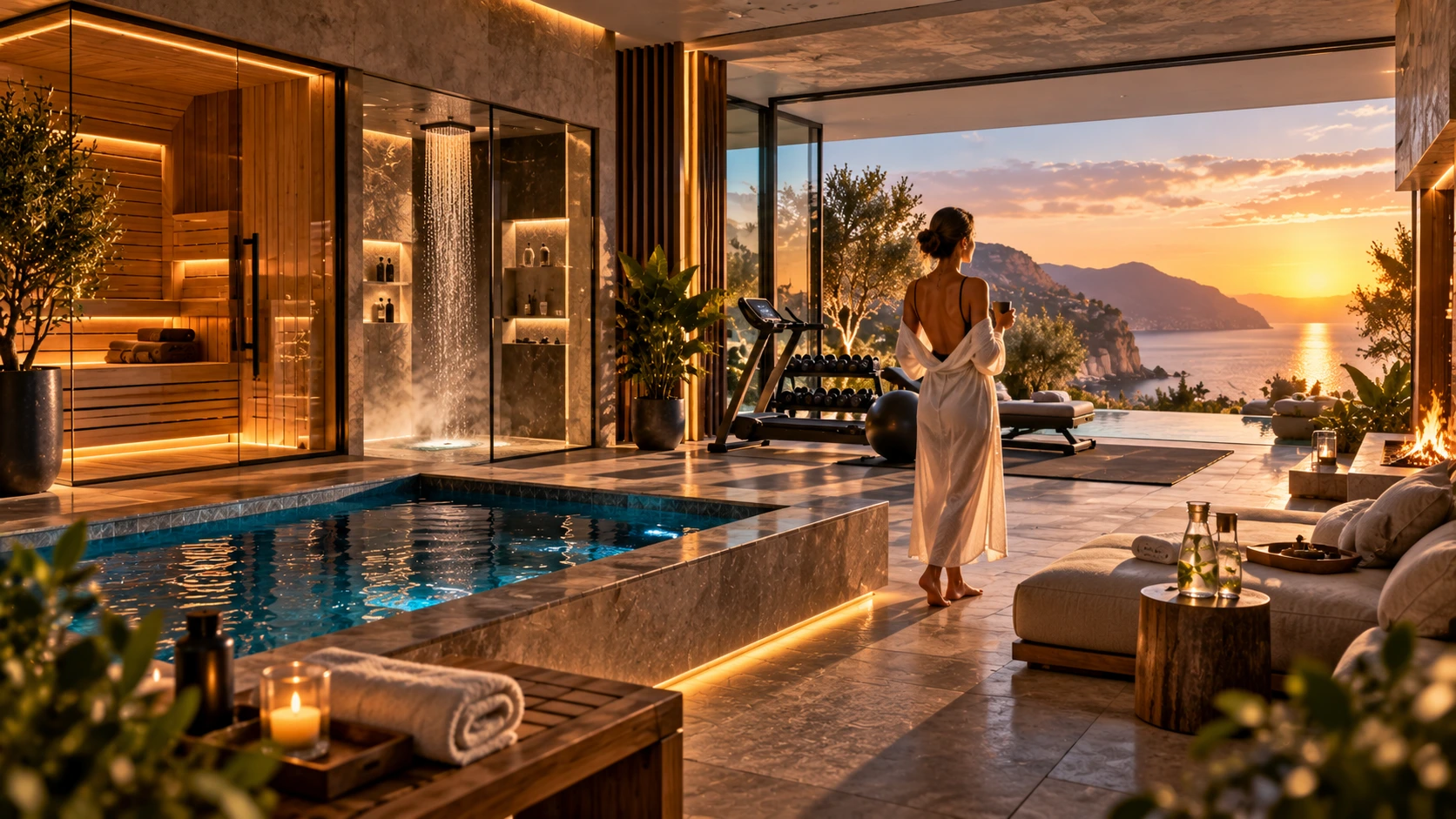
For years, luxury residential design focused heavily on entertainment: cinema rooms, bars, games rooms and impressive kitchens.
Wellness introduces a different idea.
Instead of designing purely around entertaining guests, part of the home is designed around how the owner wants to feel.
Recover
Heat, cold, mobility and recovery technologies can turn unused space into somewhere deliberately designed to decompress.
Sleep
Temperature, light and bedroom technology can influence an environment used for roughly a third of every day.
Move
A well-designed training space removes travel and makes exercise immediately accessible.
Switch Off
A dedicated environment for heat, water, meditation or quiet can create separation from work and screens.
Home Sauna
A private sauna is one of the most convincing intersections between wellness and luxury.
It can be used repeatedly, does not require an appointment and creates a genuine ritual within the home.
The biggest decision is usually whether to choose a traditional high-temperature sauna or an infrared system.
Traditional saunas heat the surrounding air to considerably higher temperatures, while infrared systems use radiant heat and generally operate at lower ambient temperatures.
Worth the money?
If you enjoy sauna regularly and have suitable space, this is one of the strongest premium wellness installations because the experience is difficult to reproduce without leaving home.
Before spending heavily, understand the electrical requirements, ventilation, installation, maintenance and which type of heat experience you genuinely prefer.
Read next: Infrared Sauna vs Traditional Sauna: Which Is Worth It? →
Smart Bed & Sleep Cooling
Sleep technology is less visually dramatic than a private spa, but it has one enormous advantage: frequency.
You use your bed every night.
Premium systems can now offer temperature control, sleep tracking, adjustable firmness or positioning, dual-zone settings and varying levels of automation.
For people who sleep hot, share a bed with someone who prefers a different temperature or simply place a high value on sleep, the bedroom may be a more rational place to invest than the spa.
Read next: Smart Bed vs Bed Cooling System: Which Is Better for Sleep? →
Home Gym & Recovery Space
A private gym does not need dozens of machines to be useful.
In many homes, the smartest approach is a beautifully designed movement space with carefully selected equipment rather than trying to reproduce a commercial health club.
Weights, adjustable resistance, cardio equipment, floor space and mobility tools can cover an enormous amount.
What makes the luxury version interesting is integration.
The training area can flow directly into a sauna, shower, plunge or recovery zone, creating a complete environment rather than a room containing exercise equipment.
Where the money makes sense
Spend on equipment you will repeatedly use, flooring, ventilation, lighting and layout before filling the room with specialist machines simply because there is space.
Cold Plunge
A permanent cold plunge transforms cold-water immersion from something requiring bags of ice and preparation into an experience that is available immediately.
That convenience is arguably the strongest argument for spending more.
Premium systems can maintain water temperature, filter and circulate water and dramatically reduce the friction involved in using cold immersion regularly.
Cold water is not magic, however. Benefits depend on the outcome being discussed, and more discomfort does not automatically mean more benefit.
Worth the money?
Potentially — especially for someone who already knows they enjoy and consistently use cold immersion. Buying an expensive plunge to discover whether you like cold water is a much weaker proposition.
Red Light Therapy
Red and near-infrared light devices are among the easiest pieces of wellness technology to add without redesigning a room.
Panels range from compact devices to large systems capable of covering much more of the body.
The attraction is convenience. A panel can sit in a home gym, bedroom or recovery space and be used without travelling anywhere.
But this is also a category where marketing can run ahead of evidence. Photobiomodulation is a genuine field of research, but that does not mean every claim made for every consumer device is established.
Read our experience: Red Light Therapy: What Is Worth Knowing? →
Steam Rooms, Showers & Hydrotherapy
This is where home wellness starts becoming architecture.
Steam rooms, rainfall showers, experience showers, plunge pools and hydrotherapy features can turn an ordinary bathroom into something approaching a private spa.
The wellness case may be less straightforward than simply moving more or sleeping better, but the experiential value can be enormous.
Water, heat, quiet and beautiful materials create an environment people genuinely want to spend time in.
For a luxury home, that matters.
Circadian Lighting & Automated Shading
One of the least dramatic upgrades may also be one of the most intelligent.
Lighting can be designed to change through the day, while automated blinds and shading can help manage natural light, glare and privacy.
The best systems largely disappear into the architecture.
You are not constantly interacting with another gadget. The environment simply changes around you.
For bedrooms in particular, thoughtful lighting and blackout control may deserve consideration before buying yet another wearable designed to tell you that you slept badly.
Air & Water Quality
Air purification and water filtration lack the theatre of a cedar sauna or sculptural plunge pool.
But they operate continuously rather than for twenty minutes at a time.
The value depends greatly on local conditions, existing water quality, ventilation, pollutants and individual needs.
This is an area where testing and understanding the problem should come before buying the most expensive solution.
Spend intelligently.
Luxury wellness should not mean installing technology simply because it exists. Identify the problem first, then decide whether the upgrade solves it.
What Does the Ultimate Home Wellness Room Look Like?
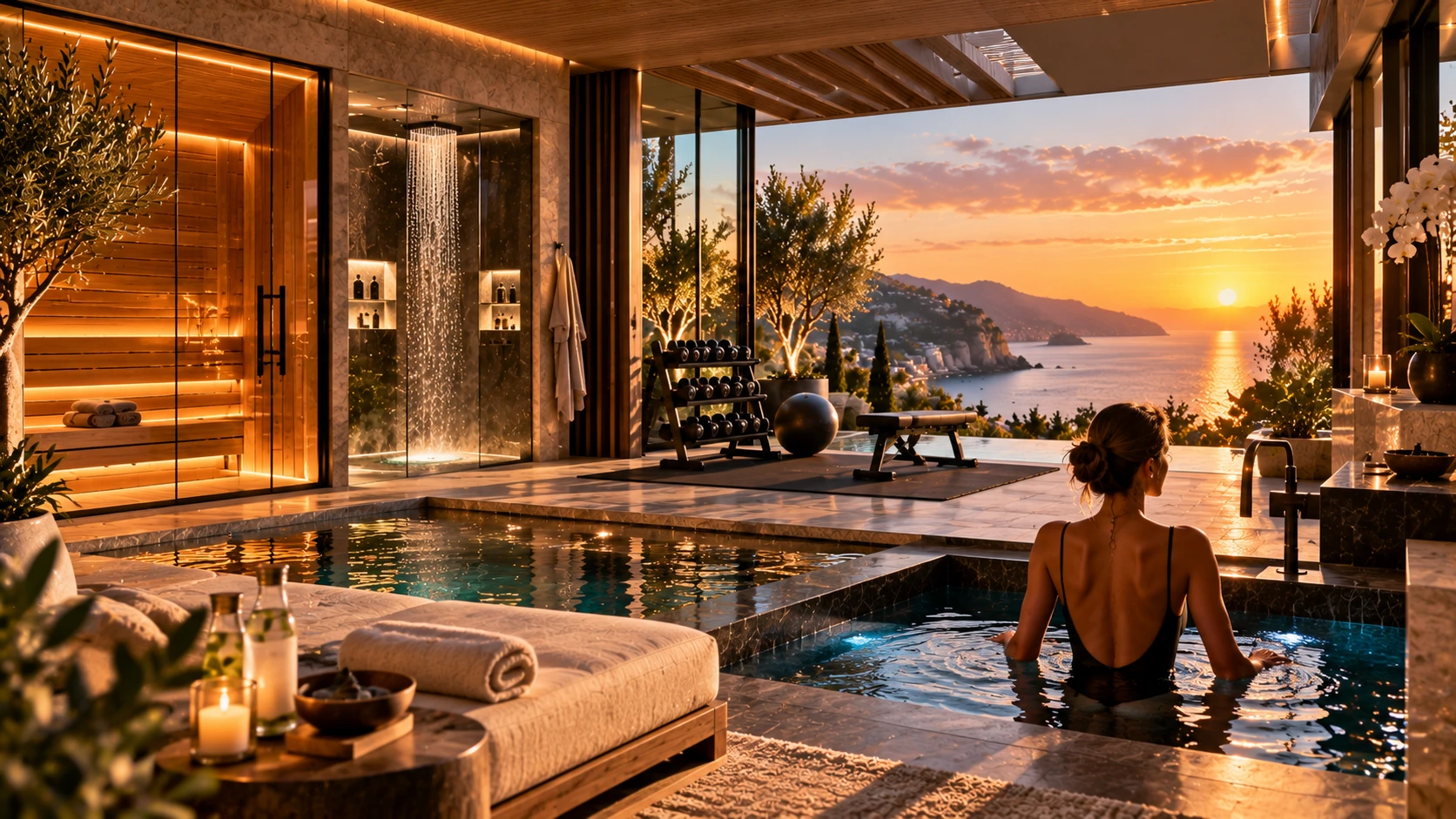
The ultimate room is not necessarily the one containing the most technology.
It is the one where everything works together.
Imagine a compact strength and mobility area flowing into a sauna and temperature-controlled plunge, with a high-quality shower, excellent ventilation, intelligent lighting and somewhere comfortable to sit afterwards.
Add discreet storage, natural materials and a view if the architecture allows it.
Suddenly it is no longer a collection of wellness products.
It is an environment.
The FHL Home Wellness Test
- Frequency: how many times each week will you realistically use it?
- Friction: does it make a useful habit easier or create another complicated routine?
- Evidence: are the specific benefits you want reasonably supported?
- Experience: do you genuinely enjoy using it?
- Space: does it improve the room or overwhelm it?
- Installation: what electrical, plumbing, drainage or ventilation work is required?
- Maintenance: what needs cleaning, servicing or replacing?
- Longevity: will it still be useful when the current wellness trend has moved on?
Start with behaviour, not equipment.
If you already sauna several times each week, a home sauna removes friction. If you already train consistently, a private gym saves time. If you already use cold immersion, a temperature-controlled plunge improves convenience.
Buying the expensive version of a habit you do not yet have is far more speculative.
Luxury Home Wellness FAQs
What is a home wellness room?
A home wellness room is a dedicated space designed around activities such as exercise, recovery, sauna, cold immersion, meditation, massage or relaxation. It can range from a simple movement room to a fully integrated private spa.
What should a luxury wellness room include?
There is no required list. Useful options include a sauna, shower, plunge, exercise area, recovery equipment, comfortable seating, good ventilation, storage and intelligent lighting. The best combination depends on how the owner intends to use the space.
Is a home sauna worth the money?
For someone who already enjoys regular sauna use and has appropriate space, a home sauna can offer excellent convenience and frequent use. Installation requirements and the choice between traditional and infrared systems should be considered carefully.
Is a home cold plunge worth it?
A dedicated plunge can be worthwhile for regular cold-water users because temperature control and filtration remove much of the preparation involved. It is harder to justify if you are unsure whether cold immersion will become a lasting habit.
What is the best wellness investment for a home?
There is no universal answer, but upgrades used frequently tend to offer the strongest value. Sleep environments, exercise spaces and simple technologies that remove friction from existing healthy routines can be particularly compelling.
Does a wellness room add value to a home?
It may increase appeal for some premium buyers, particularly when the space is beautifully integrated and adaptable. However, highly personalised or difficult-to-remove installations will not appeal equally to every future buyer.
Build Around the Life You Want to Live.
The attraction of home wellness is obvious.
No journey. No booking. No waiting for equipment. No need to turn a recovery session into an expedition.
But expensive wellness equipment does not create healthy behaviour by itself.
The smartest investment is therefore not necessarily the most advanced machine.
For many people, a great sleep environment, useful training space and frequently used sauna may deliver more long-term value than filling a room with every fashionable piece of recovery technology.
Cold plunge, red light, steam and other additions can then be layered around the routines you genuinely enjoy.
At its best, luxury home wellness is not about owning more equipment.
It is about designing the home so that feeling better becomes easier.