Cold Plunge Therapy:
Is It Actually Worth the Shock?
Cold exposure has become one of wellness's biggest rituals. But beyond the ice, influencers and expensive tubs, what does it actually do — and is a premium cold plunge worth paying for?
There is something wonderfully uncomplicated about getting into very cold water. Your body doesn't care about branding, optimisation language or how expensive the tub was. It simply knows one thing: this is cold.
Cold-water immersion has travelled an interesting road. What was once associated with athletes, winter swimmers and uncomfortable recovery baths has become a centrepiece of the modern wellness space.
Today you can spend almost nothing filling a bath with cold water — or thousands on a beautifully engineered plunge with refrigeration, filtration, sanitation and app control.
That raises the question we care about at Frequency High Life: where does the benefit end and the luxury begin?
What happens when you get into cold water?
Cold-water immersion exposes a large area of the body to a rapid thermal challenge. Blood vessels near the skin constrict, breathing can change abruptly, heart rate and blood pressure can respond, and the body begins working to preserve its core temperature.
That initial response is one reason a plunge can feel so intense. It is also why the experience shouldn't be treated as completely harmless simply because it has become fashionable.
Where the evidence becomes interesting is recovery. Systematic reviews suggest cold-water immersion can reduce perceived muscle soreness and can assist some aspects of recovery following strenuous exercise. But the results vary according to the exercise performed, the outcome being measured and when it is measured.
Cold exposure is a tool, not a superpower. The evidence is much more convincing when the question is specific — such as post-exercise soreness or recovery — than when every possible wellness benefit is bundled into one extraordinary claim.
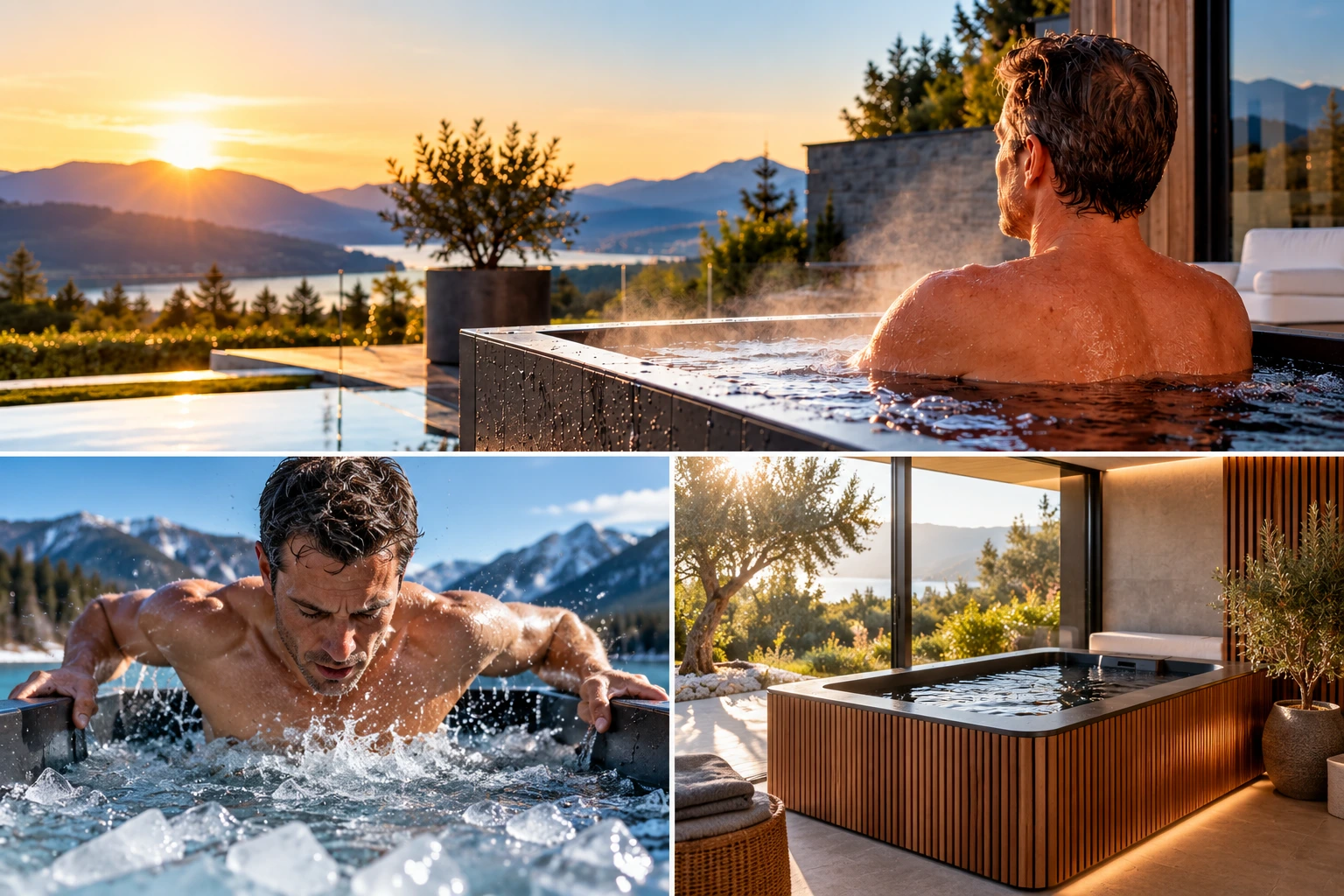
Cold-water immersion creates an immediate physiological challenge. More extreme is not automatically more effective.
What might cold plunging actually be useful for?
Strip away the extraordinary promises and several areas remain genuinely interesting.
Muscle Soreness
One of the more consistently supported uses. Research suggests cold-water immersion can reduce delayed-onset muscle soreness after demanding exercise.
Exercise Recovery
Some recovery measures can improve, particularly after certain forms of strenuous exercise. The effect is not universal across every performance measure or sport.
Alertness & The Experience
The immediate sensation is difficult to ignore. Many people report feeling alert or invigorated afterwards, although subjective experience should not be confused with proof of broad health benefits.
Wellbeing
This is an active area of research. Recent reviews suggest potentially interesting effects on stress, sleep and quality of life, but the evidence base remains limited and better long-term trials are needed.
Feeling dramatically different after cold exposure is real as an experience. It does not automatically mean every biological claim made about cold therapy is true.
Does colder mean better?
Probably not in the simplistic way social media sometimes suggests.
Studies use different temperatures, immersion depths and durations, making a universal “perfect protocol” difficult to defend. Research continues to suggest that outcomes depend heavily on the type of exercise, temperature, exposure duration and the recovery outcome being examined.
In other words, turning your plunge into an endurance contest doesn't automatically make it more useful.
The aim should be an appropriate cold stimulus — not proving that you can suffer more than somebody else.
Cold shower, ice bath or premium plunge?
This is where things become commercially interesting, because the fundamental ingredient — cold water — is remarkably cheap.
And that distinction matters.
A premium plunge does not necessarily give you premium cold. What you're largely paying for is control, consistency, cleanliness, design and the removal of friction.
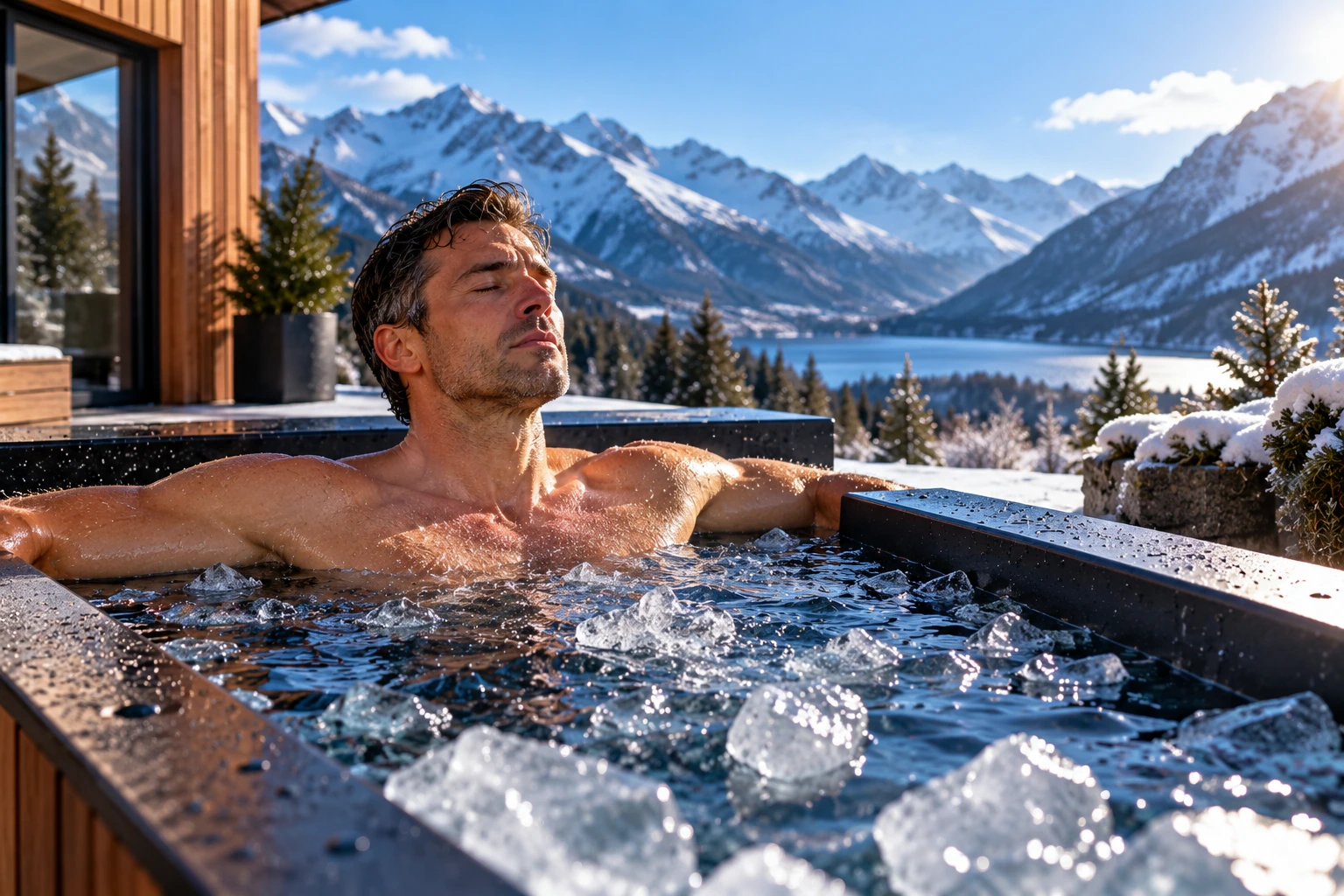
The premium proposition is less about making water colder and more about making cold immersion effortless enough to use consistently.
So why spend thousands on one?
If you simply want to discover whether you like cold-water immersion, you don't need an expensive cold plunge. Start simply.
But that isn't the entire purchasing decision.
The argument for a premium system begins when cold immersion becomes something you genuinely intend to use regularly. At that point, convenience starts to have real value.
The best premium wellness products often work this way. They don't necessarily invent a new biological effect. They remove enough inconvenience that a useful behaviour becomes easier to repeat.
That's a much more credible reason to consider spending serious money than believing a £5,000 plunge somehow contains colder or more therapeutic water than a £100 solution.
We are currently examining premium cold-plunge systems for a future Frequency High Life buyer's guide. Any product we have not personally tested will be clearly identified as such.

What if your cold plunge was part of a private wellness retreat?
For homeowners looking beyond a standalone plunge, the next step may be a beautifully designed outdoor space combining heat, cold immersion and relaxation.
Sweaty Yeti offers premium outdoor wellness structures, including sauna and cold plunge combinations. Our dedicated guide explores the collection, layouts and important buying considerations.
This is a luxury lifestyle purchase rather than a requirement for experiencing the benefits of cold-water immersion.
Explore Sweaty Yeti Saunas →Cold isn't automatically harmless.
The initial cold response can place sudden demands on the cardiovascular system. That's particularly important because the very intensity people seek from cold exposure is also part of what creates the risk.
Don't turn wellness into a dare.
Cold-water immersion may not be appropriate for everyone, particularly people with cardiovascular disease or other relevant medical conditions. If you have a medical condition, take medication affecting cardiovascular function, are pregnant, or are unsure whether intense cold exposure is appropriate for you, seek individual medical advice before starting. Avoid unsupervised extreme cold exposure and get out if you feel unwell.
There is also a performance nuance worth knowing. Cold immersion immediately after training isn't automatically beneficial for every goal. Research has found that some measures of explosive performance can be temporarily impaired immediately following cold-water immersion.
So again: the question isn't whether cold is “good”. It's what you're using it for.
Worth the shock?
Potentially, yes.
Cold-water immersion has enough evidence behind specific recovery outcomes to deserve more respect than a passing wellness fad. There are plausible and measurable reasons athletes and active people have used it long before luxury cold plunges became fashionable.
But the grander claims deserve more caution. Cold exposure is not a substitute for sleep, movement, sensible training, nutrition or medical care.
And a premium plunge?
That is ultimately a convenience and lifestyle decision as much as a wellness decision. If you use cold immersion occasionally, save your money. If it becomes a consistent part of your routine, a temperature-controlled, filtered system starts making considerably more sense.
Which is exactly where we'll be looking next.
Better wellness isn't about collecting more rituals. It's about finding the few things actually worth repeating.