Red Light Therapy: What Is It Actually Worth Knowing?
We bought a MitoPRO+ panel to separate the science, the marketing and the real-world experience.
Red light therapy has moved from specialist clinics into bedrooms, gyms and increasingly sophisticated home wellness setups. Depending on who you listen to, it is either a remarkable piece of wellness technology or another expensive gadget surrounded by extravagant claims.
We wanted a better answer.
So Frequency High Life bought a MitoPRO+ panel with our own money. No supplied review unit. No scripted endorsement. We are going to use it, document the experience and compare what we notice with what the scientific evidence can actually support.
This is the beginning of that test.
What exactly is red light therapy?
Red light therapy belongs to a broader field usually called photobiomodulation, or PBM. In simple terms, specific wavelengths of visible red and near-infrared light are delivered to tissue with the aim of influencing biological processes.
Unlike ultraviolet light, the wavelengths used for PBM are not being used to tan or deliberately damage the skin. And unlike a heating lamp, the central idea is not simply to make tissue hot.
The proposed biological mechanisms are considerably more interesting. Researchers have investigated how light at particular wavelengths interacts with cellular processes, including mitochondrial activity and signalling pathways.
But there is an important distinction: understanding a plausible mechanism does not automatically prove every claimed health outcome. Different wavelengths, power levels, treatment durations and conditions can produce different results.
Visible red light
Common wavelengths in PBM research and consumer devices, particularly where more superficial tissue is being targeted.
Near-infrared light
Invisible wavelengths frequently used in PBM research and commonly incorporated into panels intended to deliver light beyond the skin surface.
So does the science actually support it?
Yes — but with a much bigger asterisk than some advertising would have you believe.
A 2025 evidence-based expert consensus published in the Journal of the American Academy of Dermatology concluded that photobiomodulation is a safe treatment modality for adults and identified evidence supporting a number of specific clinical applications.
A separate 2025 umbrella review examined 15 meta-analyses covering 204 randomised clinical trials and more than 9,000 participants. It found significant effects for some outcomes, but also concluded that the certainty of evidence for most endpoints remains low to moderate and that better standardised trials are still needed.
That's exactly why we're interested in it.
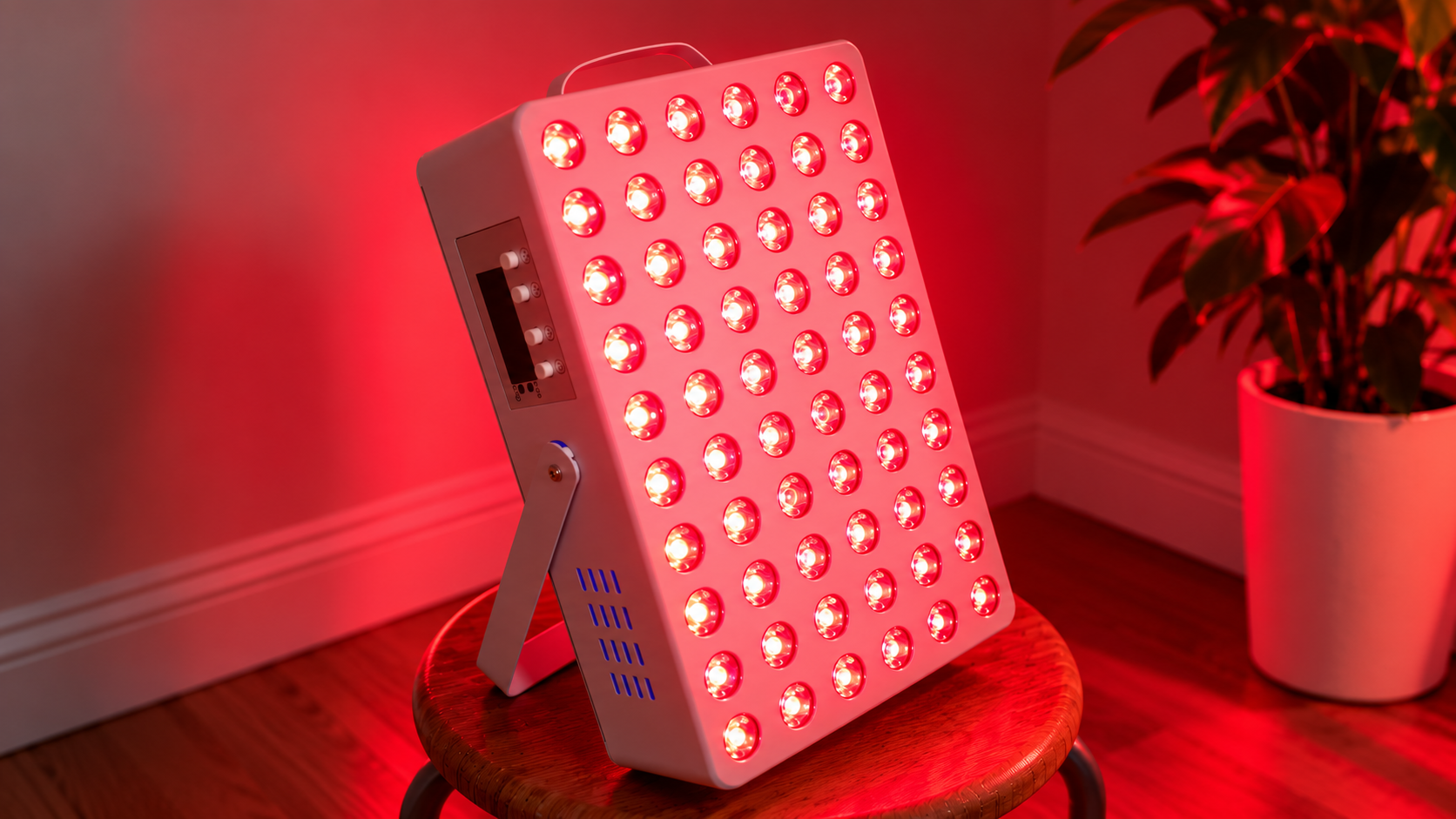
Our MitoPRO+ in use. The intensity of the red light is difficult to convey until you actually switch one on.
Why we bought the MitoPRO+
We didn't begin with the MitoPRO+ as complete newcomers to red light devices.
There was already a cheaper red light product available to us. That made this test more interesting: would spending substantially more money on a purpose-built panel produce an obviously different ownership and usage experience?
The compact MitoPRO 300+ is the smallest panel in the current MitoPRO+ range and is intended primarily for targeted use. According to Mito Red Light's current specifications, it uses 60 LED chips and combines four wavelengths rather than the simpler two-wavelength arrangement found in many entry-level products.
Mito lists the wavelength distribution as 25% 630nm, 25% 660nm, 25% 830nm and 25% 850nm, producing an overall 50/50 split between visible red and near-infrared LEDs.
The company also lists third-party testing, low EMF, flicker-free operation, ETL certification, a three-year warranty and a 60-day return period.
Those specifications made it interesting enough for us to spend our own money and find out what the device is actually like to live with.
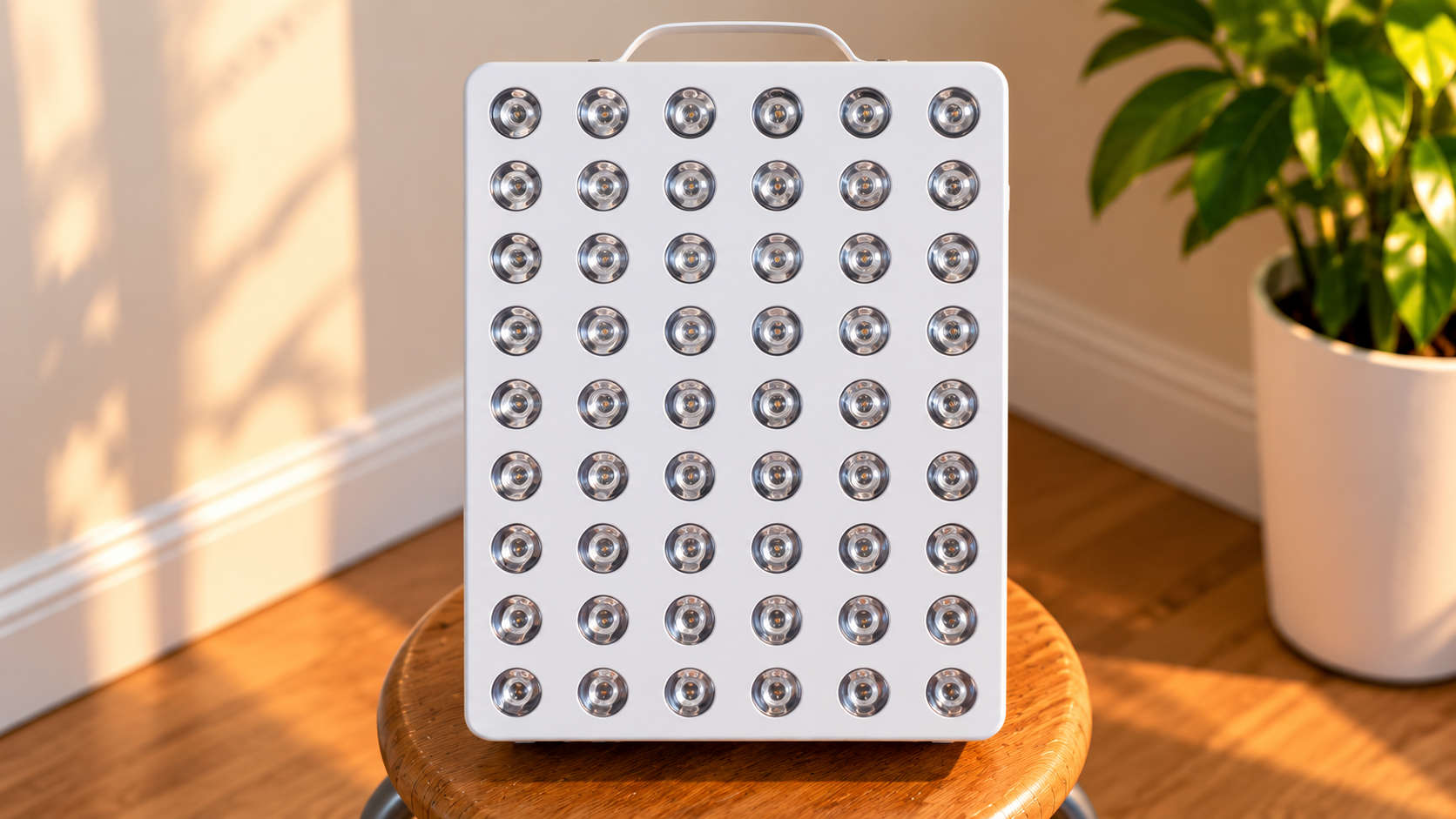
The compact panel is designed for targeted sessions rather than simultaneous head-to-toe coverage.
The first session surprised us.
This is where the story became considerably more interesting.
On the first day, the panel was used for approximately 20 minutes. Afterwards there was a striking subjective sensation described as a pulsating feeling throughout the body.
A second session later that day was directed towards the back, where a noticeable tingling sensation was experienced.
“I already had a cheaper red light device, so I wasn't expecting the difference to feel this obvious. After around 20 minutes I could feel what seemed like my whole body pulsating. When I later tried it on my back, I noticed tingling there too. Whatever those sensations ultimately mean, the experience was completely different from the cheaper device.”
— DANIEL VALE · FREQUENCY HIGH LIFE · FIRST SESSIONThere is a crucial distinction here.
A sensation is not proof of a therapeutic effect. We cannot conclude from pulsating or tingling that a particular biological outcome occurred, and we won't manufacture that conclusion simply because it makes a better product story.
What we can legitimately say is that the first-use experience was markedly different from the cheaper red light device already available to us.
That is enough to make us want to keep testing.
Is a more expensive red light actually better?
Not automatically.
Price alone tells you very little about whether a PBM device will produce a useful dose of light. A beautiful £1,000 panel with poorly chosen wavelengths or misleading specifications does not become scientifically superior because it costs more.
When comparing devices, we would pay more attention to wavelength, irradiance measurements, treatment area, distance, build quality, independent testing and whether the manufacturer provides meaningful technical information.
Our initial experience with the MitoPRO+ does suggest something simpler, though: not all red light products feel equivalent in use.
We noticed a substantial difference between this and our cheaper device. Whether that translates into worthwhile longer-term outcomes is exactly what the next 30 days are intended to explore.
Our 30-day real-world test
Rather than publish a verdict after one enthusiastic session, we're treating this article as a living field test.
Use it consistently
We'll use the panel according to sensible manufacturer guidance rather than assuming that more exposure automatically means better results.
Observe, don't invent
We'll record noticeable changes and experiences without converting subjective sensations into medical conclusions.
Compare it with the cheaper device
One of our most useful reference points is something we already own. We want to know whether the premium feels justified after the novelty has disappeared.
Update the verdict
This article will be updated as the test progresses. If the initial excitement fades, we'll say so. If the device earns a permanent place in the routine, we'll say that too.
Would we buy it again?
Too early to give you that answer.
And that's deliberate.
First impressions are extremely positive. The MitoPRO+ feels substantially more serious than the cheaper red light device we had already used, the build feels convincing, operation is simple and the first session produced sensations we simply hadn't experienced with the cheaper unit.
But a strong first impression is not the same thing as demonstrating a meaningful wellness benefit.
So for now our verdict is:
Promising. Fascinating. Definitely worth continuing the experiment.
Come back after the 30-day test for the answer that matters.
What we'd look for in a red light panel
Published wavelengths
A manufacturer should tell you what wavelengths the device actually produces rather than simply saying “therapeutic red light”.
Credible irradiance data
Power figures are useful only when measurement method and treatment distance are understood.
The right coverage
A compact panel can be excellent for targeted use but shouldn't be confused with a genuine full-body setup.
Testing and warranty
Independent testing, electrical certification, sensible returns and a meaningful warranty matter on a product you may use repeatedly for years.
Editorial disclosure: Frequency High Life purchased the MitoPRO+ featured in this article independently. It was not supplied by Mito Red Light. We are exploring an affiliate relationship with the company. If affiliate links are subsequently added to this article, they will be clearly disclosed and we may receive a commission from qualifying purchases at no additional cost to the reader. Editorial conclusions remain our own.
Red light therapy FAQs
Is red light therapy scientifically proven?
Photobiomodulation has a substantial scientific literature and evidence supports some specific applications. However, evidence quality varies by condition and protocol, so it is inaccurate to treat every consumer wellness claim as proven.
What is the difference between red and near-infrared light?
They occupy different parts of the light spectrum. Visible red light is commonly used around the 600nm range, while near-infrared wavelengths commonly used in PBM extend beyond visible red and are frequently studied for their ability to reach deeper tissue.
What wavelengths does the MitoPRO+ use?
The current MitoPRO+ specification lists four peak wavelengths: 630nm, 660nm, 830nm and 850nm.
Is 20 minutes better than 10 minutes?
Not necessarily. PBM is dose-dependent, and the appropriate exposure depends on the device, irradiance, distance, treatment target and protocol. Longer should not automatically be interpreted as better.
Did the MitoPRO+ cause the pulsating and tingling sensations?
Those sensations occurred after and during our first sessions, but that observation cannot establish their physiological cause or demonstrate a therapeutic effect. We report them because they were part of our genuine first-use experience.
Would Frequency High Life recommend the MitoPRO+?
We're not issuing a final recommendation after one day. Initial impressions are strong, but this is a 30-day test. We'll update this article as our experience develops.
Sources & further reading
Maghfour J, et al. (2025). Evidence-based consensus on the clinical application of photobiomodulation. Journal of the American Academy of Dermatology.
Son Y, et al. (2025). Effects of photobiomodulation on multiple health outcomes: an umbrella review of randomized clinical trials.
Oliveira S, et al. (2024). Effectiveness of Photobiomodulation in Reducing Pain and Disability in Patients With Knee Osteoarthritis: A Systematic Review With Meta-Analysis.
Mito Red Light. MitoPRO+ Series specifications and technical information. Product specifications checked October 2026.
The test has only just begun.
We'll update this article as our MitoPRO+ experiment develops — including what changes, what doesn't and whether we still think the investment was worthwhile after 30 days.
Explore The Journal