Gas-Powered vs Electric Sauna: Which Is Better for Your Home?
Two ways to create a premium home sauna experience. We compare installation, heat, convenience, running costs, safety and long-term value before you invest.
A luxury sauna is more than a garden feature. It is a long-term investment in how you relax, recover and spend time at home. But should you choose a gas-powered sauna or an electric sauna?
Electric sauna heaters are a familiar choice, offering straightforward temperature controls and an established installation route. Gas-powered sauna heaters are a more specialised alternative, particularly interesting where electrical capacity or off-grid use matters.
Neither system is automatically superior. The better choice depends on the sauna cabin, its location, your available utilities, installation requirements and how you intend to use it.
Quick answer: Electric heating is often the simpler option for a home with suitable electrical supply and a professionally installed sauna circuit. Gas heating deserves consideration where a compatible, professionally installed system suits the location and electrical supply is limited. In both cases, safe installation comes first.
If you are still deciding whether to invest in a sauna at all, our luxury home wellness guide explores how saunas compare with other premium home upgrades.
How Do Gas and Electric Saunas Work?
Gas-Powered Sauna
A gas sauna uses a purpose-designed gas-fired heater to warm the sauna space and, depending on the system, sauna stones. Gas may be supplied from a suitable approved fuel installation.
Gas heating can be attractive for certain outdoor and off-grid applications, but the appliance must be designed for sauna use and installed with appropriate ventilation, flue arrangements and combustion safety provisions.
Electric Sauna
An electric sauna uses resistance heating elements to heat sauna stones and the surrounding cabin. Many systems offer thermostatic controls, timers and optional remote operation.
Electric systems avoid combustion within the heater, but may require a dedicated electrical supply and professional installation, particularly for larger premium cabins.
Both are traditional hot-sauna technologies. They should not be confused with infrared cabins, which use a different heating approach. For that distinction, read our infrared sauna vs traditional sauna comparison .
Gas vs Electric Sauna at a Glance
| Consideration | Gas-Powered | Electric |
|---|---|---|
| Energy source | Approved gas fuel supply | Electrical supply |
| Installation | Specialist gas, flue and ventilation requirements | Appropriate electrical circuit and electrical safety requirements |
| Controls | Depends on heater model | Often digital or thermostatic |
| Running costs | Depend on fuel, efficiency and usage | Depend on electricity tariff, heater power and usage |
| Off-grid suitability | Potentially useful with a suitable approved system | Requires sufficient electrical generation or supply |
| Maintenance | Gas appliance and combustion-system checks | Electrical and heater inspections |
| Best suited to | Specific outdoor or off-grid installations | Homes prioritising familiar controls and convenience |
Actual specifications vary by manufacturer and model. Always verify the chosen heater, cabin compatibility and installation requirements before purchasing.
The Sauna Cabin Matters as Much as the Heater
Buyers often concentrate on whether a sauna uses gas or electricity. Yet the cabin's insulation, glazing, ventilation, dimensions and construction can influence comfort, heat retention and overall satisfaction.

Insulation
Good construction can help retain heat and reduce wasted energy, regardless of the heater type.
Glazing
Large glass fronts create an impressive outlook, but glazing specification matters for thermal performance.
Ventilation
Correctly designed ventilation supports a comfortable sauna environment and is essential for safe operation.
Which Sauna Costs Less to Run?
There is no universal winner. A meaningful comparison requires the actual heater specifications, local energy prices, cabin characteristics and expected session length.
Electric Sauna Running Costs
For a simplified illustration, an 8 kW electric heater operating at full rated power for one hour would consume 8 kWh of electricity.
At an illustrative electricity price of 25p per kWh, that would cost approximately £2. Real sessions may cost more or less because warm-up time, thermostat cycling and actual energy consumption vary.
Gas Sauna Running Costs
A gas system's running cost depends on its fuel consumption, gas price, efficiency and operating pattern. Bottled-gas pricing may differ substantially from mains-gas pricing.
Without the manufacturer's consumption figures and your actual fuel costs, a direct pounds-per-session comparison would be speculative.
Before buying: Ask for the heater's rated fuel or electricity consumption, estimated warm-up requirements, recommended servicing and any installation costs. Compare the total ownership cost, not simply the headline purchase price.
Installation and Safety Come First
A premium sauna should be enjoyable for years. That begins with a properly designed and installed system.
Gas Sauna Safety
A gas-fired sauna requires an appliance specifically approved for its intended application, suitable combustion-air supply, appropriate flue arrangements and professional installation.
In the UK, gas work must be undertaken by a suitably qualified Gas Safe registered engineer where required. Carbon monoxide safety and manufacturer instructions are critical.
Electric Sauna Safety
Electric sauna heaters must be correctly sized for the cabin and connected to an appropriate electrical installation.
A qualified electrician should assess supply capacity, protective devices, wiring, isolation and the manufacturer's installation requirements.
Never adapt an ordinary camping heater, patio heater or unapproved gas appliance for use inside a sauna. Do not assume that an outdoor cabin is exempt from ventilation, fire-safety or installation requirements.
Steam & Oak Ruutu 230 Thermowood Cube Sauna
The Ruutu 230 is a premium cube-style sauna cabin with a distinctive glass-front design. Steam & Oak lists gas, electric and wood-fired heating configurations, allowing buyers to investigate the heating system that best suits their installation.
For our gas-versus-electric comparison, the relevant option is the gas-heated configuration. Confirm the precise heater specification, price, installation requirements and availability directly with Steam & Oak.
Frequency High Life | Wellness Selection
Discover the Luxury of a Gas-Powered Sauna
Explore the Steam & Oak Ruutu 230 Thermowood Cube Sauna, a premium outdoor sauna with gas, electric and wood-fired heating configurations.
Affiliate disclosure: We may earn a commission if you purchase through this link, at no additional cost to you.
Affiliate disclosure: Frequency High Life may receive a commission from qualifying purchases made through our featured partner links, at no additional cost to you. Product inclusion does not replace independent assessment of suitability or installation safety.
Does Gas or Electric Feel Better?
The experience of a sauna depends on more than the energy source. Cabin temperature, stone mass, airflow, humidity and the way heat is distributed all influence how a session feels.
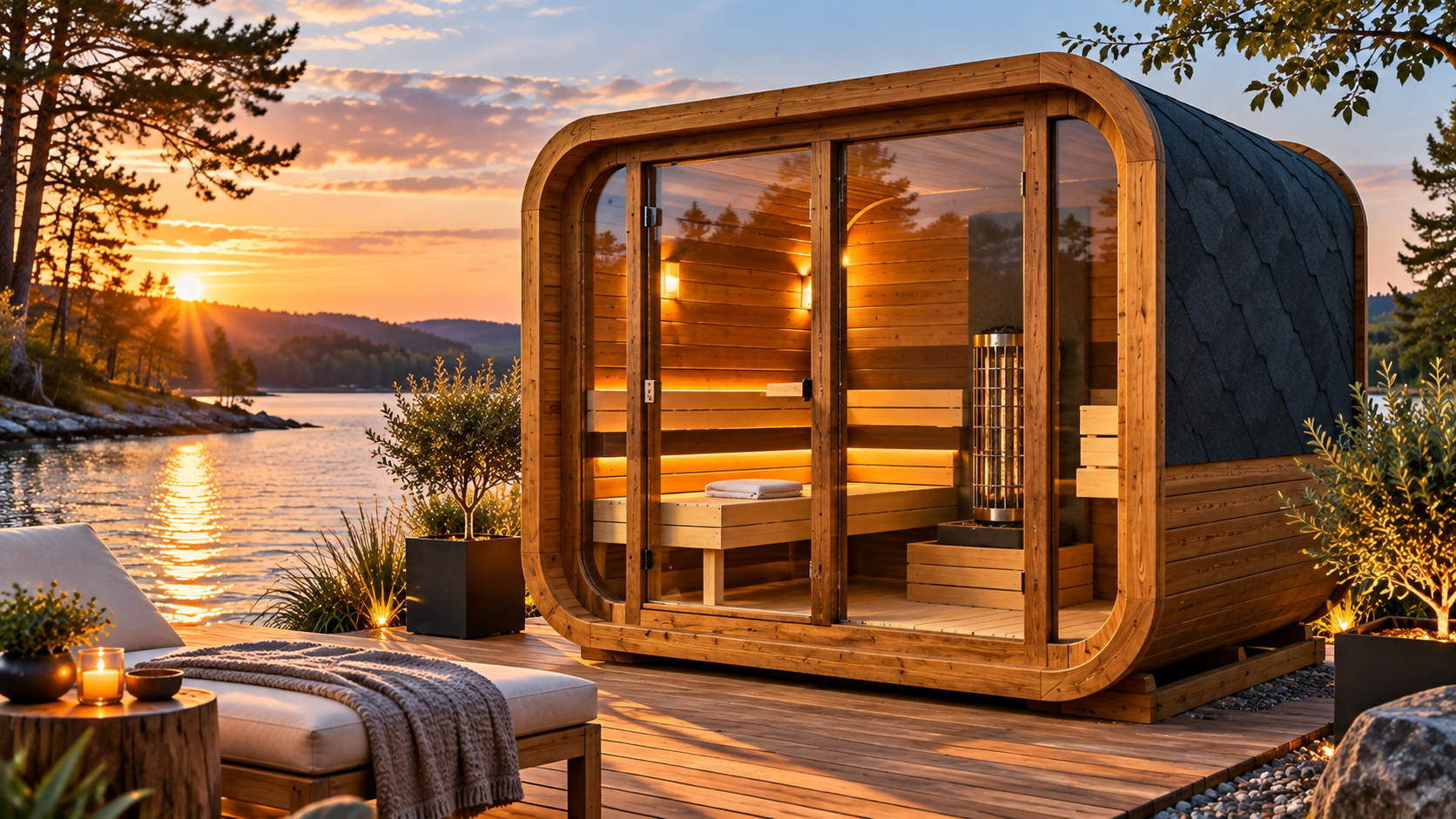
Steam & Oak highlights the character of its gas-powered sauna experience. That is an interesting proposition, but any claim that gas heating necessarily creates a better or more humid sauna should be assessed against the specific heater design and independently verified evidence.
In traditional saunas, pouring water over suitable hot sauna stones can temporarily increase perceived humidity. Follow the heater manufacturer's instructions; not every appliance permits water to be added.
Steam & Oak Vanne 3m Thermowood Barrel Sauna
The Vanne 3m offers a different premium outdoor sauna aesthetic: the traditional barrel silhouette, generous timber construction and electric heater configurations.
For homeowners who prefer electric heating and have an appropriate electrical supply, it is a useful product to explore.
Because the Vanne and Ruutu differ in cabin design, their purchase prices and specifications should not be treated as a controlled comparison of gas versus electric heating alone.
Frequency High Life | Wellness Selection
Discover Premium Electric Sauna Luxury
Explore the Steam & Oak Vanne 3m Thermowood Barrel Sauna, a beautifully crafted outdoor sauna with premium electric heating options and a spacious design for home wellness.
Affiliate disclosure: We may earn a commission if you purchase through this link, at no additional cost to you.
Check the exact electric heater included or offered as an upgrade, electrical supply requirements, delivery conditions and installation charges before ordering.
Seven Questions to Ask Before Buying a Home Sauna
- Where will the sauna be installed? Consider access, ground preparation, drainage, clearance and exposure to weather.
- What energy supply is available? Confirm electrical capacity or the suitability of a compliant gas installation.
- What is included in the advertised price? Heater, controls, delivery and installation may be priced separately.
- How many people will use it? Match the actual seating layout to your household rather than relying on headline capacity.
- How often will you use it? Frequent sessions make convenience, maintenance and running costs more important.
- Who handles servicing and repairs? Check warranties, replacement parts and availability of qualified technicians.
- Will it suit the property long term? Consider appearance, space, access and whether permissions or additional building work are needed.
Who Should Choose Gas — and Who Should Choose Electric?
Consider Gas If...
- You are exploring an approved off-grid or specialist outdoor installation.
- Your site has a suitable gas supply arrangement.
- You can accommodate the required flue and ventilation design.
- You have access to appropriately qualified installation and servicing professionals.
- You are comfortable with the system's maintenance requirements.
Consider Electric If...
- Your property has sufficient electrical capacity.
- You value straightforward temperature controls.
- You prefer a familiar residential sauna heating system.
- You want to investigate timer or connected-control options.
- You can arrange compliant professional electrical installation.
Gas vs Electric Sauna FAQs
Is a gas sauna cheaper to run than an electric sauna?
Not necessarily. Costs depend on gas prices, electricity tariffs, heater efficiency, sauna size, insulation and usage. Compare actual manufacturer consumption figures against your local energy prices.
Can you install a gas-powered sauna in a UK garden?
Potentially, provided the appliance and installation are suitable and comply with applicable requirements. Gas safety, ventilation, flue arrangements, location and any planning or building considerations must be assessed by qualified professionals.
Does an electric sauna need a dedicated circuit?
Many premium electric sauna heaters require a dedicated electrical installation. Requirements depend on heater power and the property's supply. A qualified electrician should assess the installation.
Do gas saunas create more steam?
Not inherently. Humidity and perceived steam depend on heater design, ventilation and how water is used with suitable sauna stones. Claims about a particular gas system should be checked against its technical documentation.
Which type is better for an outdoor luxury sauna?
Both can be appropriate. Electric is often convenient where suitable power is available. Gas may suit particular outdoor or off-grid installations. Cabin quality and safe installation are equally important.
Which Sauna Is Worth the Money?
For most homeowners with suitable electrical capacity, a well-designed electric sauna is a compelling, convenient starting point.
Gas-powered saunas are worth exploring when the installation circumstances justify a specialist heating system — particularly for certain outdoor or off-grid applications.
The smartest purchase is not necessarily the most expensive cabin or the most unusual heater. It is the sauna that fits your property, your routines and your long-term ownership budget.
Before committing, request written quotations covering the chosen heating configuration, installation, ventilation, ongoing servicing and total delivered cost.