Luxury Electric Car vs Petrol GT: Which Is the Better Grand Tourer?
Electric luxury promises effortless speed, silence and technology. The traditional petrol GT offers sound, theatre and character. For the long road ahead, which experience is really worth choosing?
The grand tourer has always had a simple purpose: cover serious distance quickly, comfortably and with enough theatre to make the journey feel like part of the destination.
For decades, the formula was equally simple. A powerful petrol engine at the front, an elegant cabin in the middle and enough luggage space for a weekend somewhere considerably more glamorous than home.
Now luxury electric cars are rewriting that formula.
They offer extraordinary acceleration, near-silent progress, increasingly sophisticated interiors and the possibility of crossing countries without burning a drop of petrol.
But grand touring has never been solely about numbers.
Which one wins depends on what you believe luxury driving should feel like.
Electric GT vs Petrol GT
| Factor | Luxury Electric GT | Petrol Grand Tourer |
|---|---|---|
| Refinement | Exceptional | Excellent |
| Performance | Instant and effortless | Progressive and involving |
| Sound | Almost silent | Part of the experience |
| Long-distance energy stops | Charging dependent | Fast refuelling |
| Home convenience | Excellent with charging | Conventional |
| Technology | Usually cutting edge | Increasingly sophisticated |
| Mechanical character | Different rather than absent | Strong |
| Road-trip flexibility | Route dependent | Excellent |
| Sense of occasion | Futuristic | Traditional theatre |
Luxury Is What Happens After the First 300 Miles.
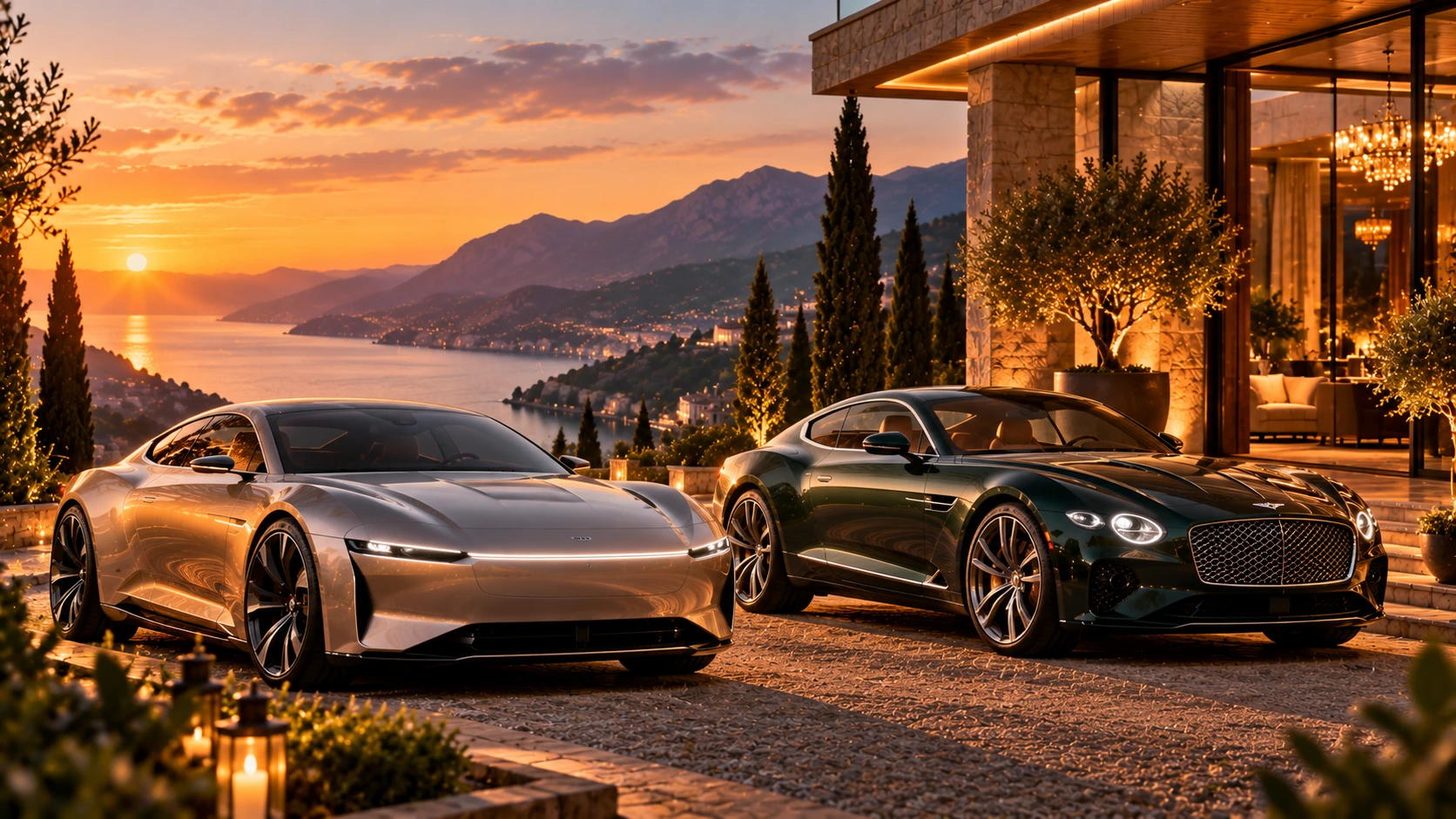
Acceleration figures dominate car launches because they are easy to measure.
But a true GT has a more difficult job.
It has to remain special after hours behind the wheel.
Comfort
The seats, suspension, driving position and cabin need to work when the novelty has disappeared and there are still hundreds of miles ahead.
Refinement
Wind noise, tyre noise, vibration and ride quality matter far more on a motorway crossing than a dramatic launch-control demonstration.
Freedom
A great GT should make a distant destination feel accessible rather than turning the journey into a logistics exercise.
Emotion
The best grand tourers make you want to take the longer route even when the sensible decision would be to arrive sooner.
Silence vs Sound
This is perhaps the biggest philosophical difference between the two.
In an electric luxury car, silence becomes part of the product.
Remove the combustion engine and suddenly you notice everything else: tyre noise, airflow, suspension movements, the sound system and even conversation.
Manufacturers can create an extraordinarily calm environment. At motorway speeds, that lack of vibration and engine noise can make an electric GT feel almost private-jet-like.
But silence is not automatically more luxurious.
A great petrol GT uses its engine as part of its personality. The sound changes with revs and throttle. There is anticipation, response and mechanical theatre.
Which wins?
Electric for tranquillity. Petrol for emotion. Neither interpretation is inherently more luxurious; they simply define luxury differently.
Performance: Instant vs Involving
Electric performance can feel almost absurdly effortless.
There is no waiting for an engine to reach the right revs and often no conventional gearbox working through ratios. Press the accelerator and enormous torque can arrive immediately.
That suits a modern GT remarkably well.
Overtaking becomes easy. Joining a motorway takes seconds. Huge performance can exist without requiring noise or drama.
Yet drama is precisely what some buyers want.
A petrol engine that builds power, changes note and works with a sophisticated transmission can make acceleration feel like an event rather than an instruction.
The Range Question Changes on a Grand Tour.
For daily driving, home charging can be one of the strongest arguments for an electric luxury car.
You arrive home, plug in and begin the next day with energy already in the battery. There may be fewer reasons to visit a conventional filling station at all.
Long-distance touring changes the equation.
Range, charging speed, charger reliability and charging availability along your route suddenly matter.
With the right car and infrastructure, this can be straightforward. A charging stop can coincide with coffee or lunch.
But petrol still has an obvious advantage when the priority is simply to stop, refuel quickly and continue.
FHL question
If your idea of grand touring involves spontaneous detours through remote areas, the freedom to refuel almost anywhere can still matter more than theoretical range figures.
Comfort May Be the Electric GT's Secret Weapon.
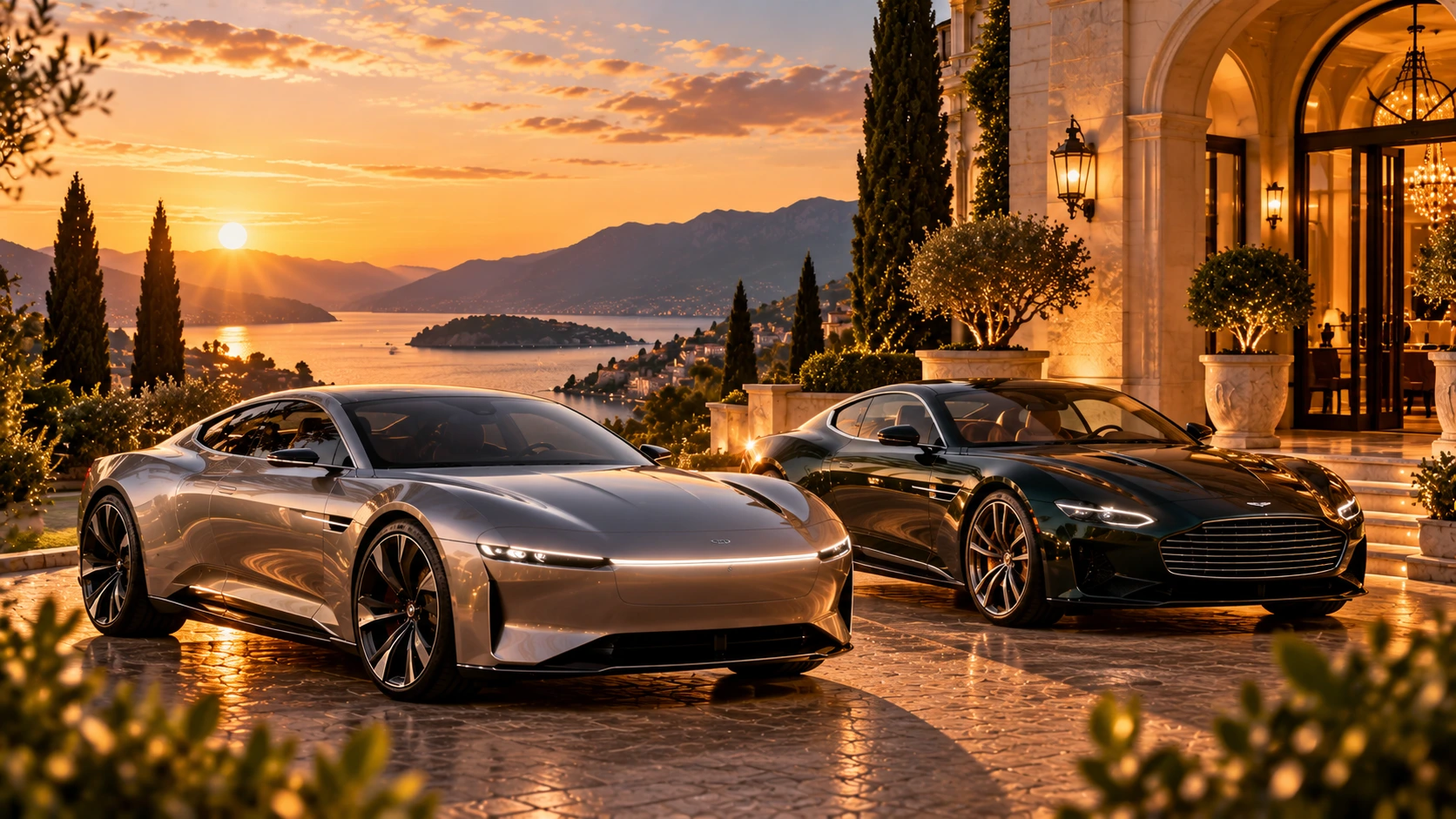
Electric drivetrains naturally remove several sources of vibration and mechanical noise.
Combine that with sophisticated air suspension, acoustic glass, premium seating and excellent climate control and the result can be an exceptional long-distance environment.
There is also something very FHL about effortless performance.
True luxury does not always need to announce how hard it is working.
This mirrors a broader theme we have explored in the changing meaning of luxury travel: time, privacy, comfort and reduced friction can be more valuable than obvious extravagance.
The petrol GT can match the comfort, but it deliberately retains more of the machinery.
For some drivers, that is a flaw.
For others, it is the entire point.
Technology vs Timelessness
Electric luxury cars are frequently used as showcases for the newest automotive technology.
Large displays, advanced driver assistance, intelligent navigation, sophisticated software, over-the-air updates and deeply integrated digital systems can make them feel genuinely futuristic.
But luxury has another tradition: things that age gracefully.
Beautiful leather. Metal switchgear. Analogue instruments. Mechanical controls. Materials that become better with use rather than outdated with the next software generation.
The most convincing modern luxury cars therefore need to balance technology with permanence.
The screen should serve the experience rather than become the experience.
What About the Driving Experience?
Electric cars carry large batteries, and weight matters.
Modern chassis technology can disguise remarkable amounts of mass, while the low position of the battery can create a low centre of gravity.
The result can be astonishingly capable.
But capability and involvement are not exactly the same thing.
Some petrol GTs communicate through engine response, gear changes, steering, sound and vibration in a way that creates a deeper sense of interaction.
The electric car may be objectively faster while the petrol car feels more alive.
The Ownership Experience Matters Too.
A luxury car does not stop being a luxury purchase when it reaches your garage.
Charging arrangements, servicing, insurance, tyres, energy costs, warranty coverage, dealer support and depreciation all contribute to the experience.
An electric GT can make everyday ownership wonderfully convenient when reliable home charging is available.
Conversely, anyone living without private charging needs to consider whether public charging fits naturally into their life.
Petrol is familiar and enormously well supported, but fuel costs and mechanical complexity remain part of the equation.
Do not buy the specification sheet.
Think about where the car will live, where you drive, how often you take long trips and how much inconvenience you are willing to tolerate. The best luxury car is the one that fits your actual life.
What Happens to Value?
Depreciation matters even when the buyer can comfortably afford the car.
Luxury vehicles can lose substantial value, and rapidly evolving battery, charging and software technology adds another variable to the electric market.
Petrol cars are not automatically protected either. Specification, rarity, brand, desirability, regulations and the wider market all influence residual values.
There is therefore no sensible rule that every petrol GT will hold its value better than every electric one.
For a very expensive purchase, the intelligent approach is to investigate the specific model rather than relying on assumptions about the powertrain.
What Does Luxury Mean to You?
The argument between electric and petrol becomes interesting because both can represent luxury exceptionally well.
They simply emphasise different qualities.
The Electric Interpretation
Silence. Instant response. Technology. Effortlessness. Home charging. A feeling that the car belongs to what comes next.
The Petrol Interpretation
Sound. Craft. Mechanical interaction. Fast refuelling. Tradition. A sense that the journey is an occasion.
This is similar to the question behind our Private Jet vs First Class comparison.
At the top end, the decision is rarely about whether both options are luxurious.
It is about which type of luxury solves the problem you care about.
Choose a Luxury Electric GT If...
- You value silence and refinement above engine theatre.
- You can charge conveniently at home.
- Most journeys comfortably fit within the car's usable range.
- You enjoy advanced technology and effortless acceleration.
- You want a luxury car that feels distinctly modern.
- You are comfortable planning charging on longer journeys.
Choose a Petrol GT If...
- The engine is an important part of why you love cars.
- You regularly make very long or spontaneous journeys.
- You want to refuel quickly almost anywhere.
- You value mechanical interaction and sound.
- You prefer traditional grand-touring character.
- You want the journey itself to feel like an event.
Luxury Electric Car vs Petrol GT FAQs
Is an electric car better for long-distance driving?
A good luxury EV can be exceptionally comfortable for long journeys because of its quiet drivetrain and effortless performance. Whether it is more convenient depends on real-world range, charging speed and charging infrastructure along the route.
What is a grand tourer?
A grand tourer, or GT, is traditionally a high-performance luxury car designed to cover long distances quickly and comfortably. It generally combines performance, refinement, luggage capacity and a strong sense of occasion.
Are luxury electric cars more comfortable than petrol cars?
They can be extremely refined because electric drivetrains generate less engine noise and vibration. Overall comfort still depends on suspension, seats, tyres, cabin insulation and vehicle design.
Are petrol GT cars becoming obsolete?
No. The market is changing, but petrol and hybrid grand tourers continue to appeal to buyers who value range flexibility, sound, mechanical character and traditional driving experiences.
Do luxury electric cars depreciate more?
Depreciation varies significantly by model. Rapid technology development can affect some electric vehicles, but brand strength, supply, desirability, pricing and the used-car market also have a major influence.
Which is better: an electric GT or petrol GT?
An electric GT may be better for quiet refinement, effortless acceleration and convenient home charging. A petrol GT may be better for rapid refuelling, long-distance flexibility and drivers who value engine sound and mechanical character.
There Is No Wrong Winner.
The electric grand tourer makes an extraordinarily convincing argument.
It is quiet, fast, sophisticated and potentially effortless to own when home charging and the right driving pattern come together.
For covering distance in calm, modern luxury, the electric GT may already be the superior tool.
But grand touring has never been solely about reaching a destination efficiently.
A great petrol GT adds sound, interaction and mechanical character to the journey. Those qualities cannot be represented on a range or acceleration chart.
So the winner depends on what you are buying.
If you want the car to make long-distance travel as effortless as possible, choose electric.
If you want the car itself to become one of the reasons for taking the journey, petrol still has an extraordinary argument.
And perhaps that is the most interesting thing about the future of luxury cars.
Technology can change the way we travel without necessarily replacing the reasons we love travelling.