The New Meaning
of Luxury Travel.
Five stars and a high room rate no longer tell the whole story. The most valuable luxuries in travel may now be space, privacy, access, extraordinary service — and the freedom to spend your time exactly as you choose.
Luxury travel used to be remarkably easy to recognise. The grand hotel. The marble lobby. The suite. The chauffeur waiting outside. The price itself was part of the definition. Today, the most memorable luxury can be considerably quieter.
A private terrace overlooking a coastline before anybody else is awake. A hotel that remembers what you prefer without repeatedly asking. A journey where somebody has quietly removed the queues, transfers, uncertainty and unnecessary decisions.
Or simply having enough space and time to feel that you have genuinely escaped.
None of those things require gold taps or a chandelier in the reception.
Which raises a more interesting question than whether a hotel is luxurious: what is actually worth paying more for when we travel?
The new luxury is not necessarily about possessing more during a trip. Often it is about removing more — friction, noise, crowds, waiting, compromise and demands on your attention.
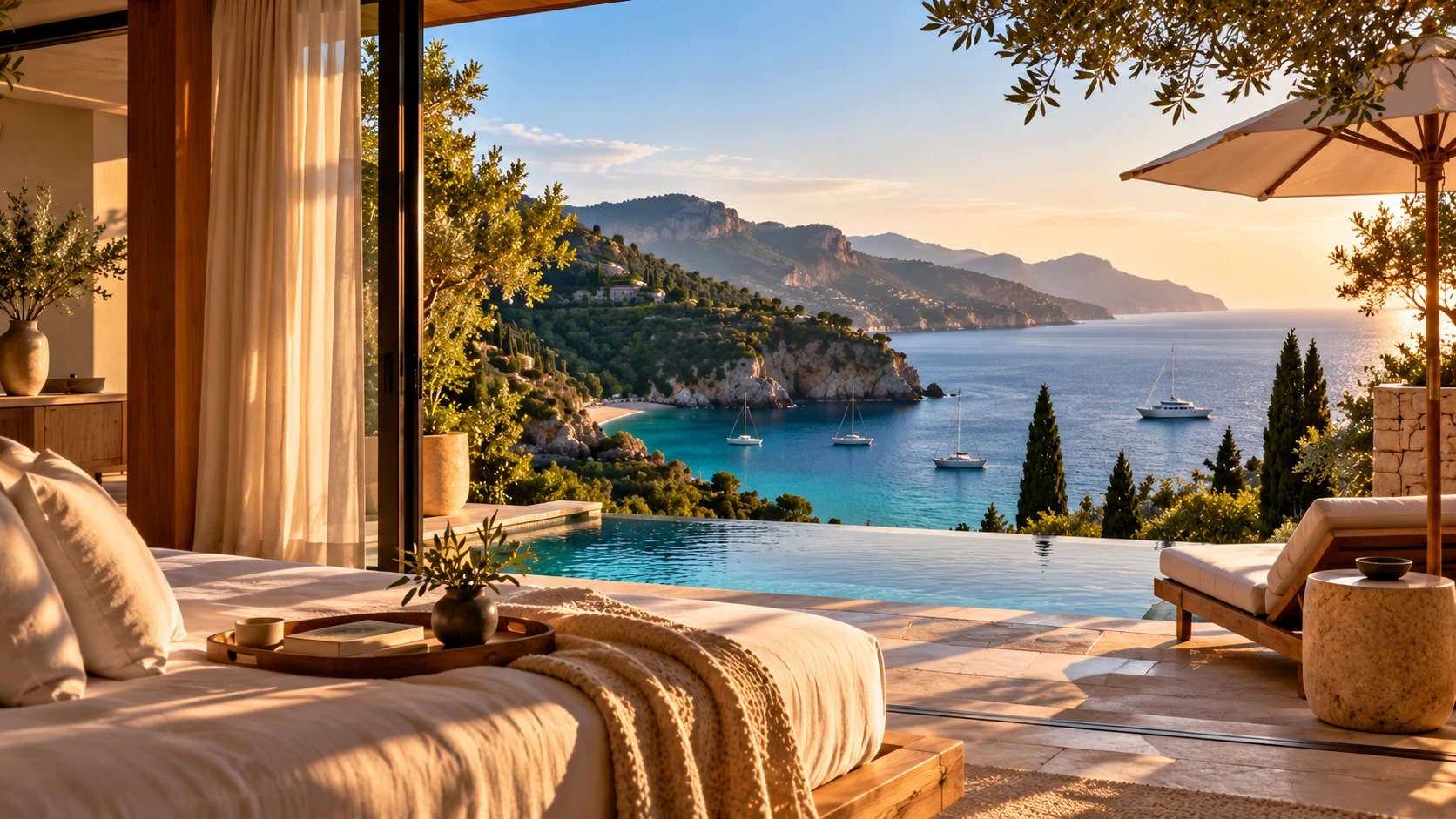
Space, privacy and a remarkable setting can matter considerably more than traditional symbols of five-star luxury.
Luxury has become less obvious.
Traditional luxury still has a place. Beautiful materials, exceptional food, elegant rooms and attentive service can transform a trip.
But expensive and exceptional are not synonyms.
Some of the most valuable elements of modern travel are things that barely appear in a photograph.
Time
Fast transfers, thoughtful itineraries and excellent organisation return something no upgrade can replace: hours of your trip.
Privacy
Fewer people, private outdoor space and the ability to retreat without feeling surrounded can completely change an experience.
Access
The right location, guide, reservation or local relationship can provide experiences that money alone cannot simply manufacture.
Attention
Great service anticipates rather than performs. The best hospitality can feel almost invisible because everything simply works.
The highest form of travel luxury may be reaching the end of a day without having spent any of it solving problems.
What is actually worth paying more for?
Paying more makes sense when the additional cost changes the quality of the experience in a way you will genuinely notice.
That sounds obvious, but travel pricing can make the distinction surprisingly difficult. An expensive room category may buy extra square metres you barely use, while a less dramatic upgrade could give you a terrace, a spectacular view or a location that changes every morning and evening of the trip.
The important distinction is between paying for something that looks expensive and paying for something that makes the trip better.
Sometimes the best luxury is simply less friction.
Consider arrival day.
A spectacular suite is wonderful. But after a long journey, a smooth airport transfer, immediate check-in, luggage already handled and somewhere excellent to eat without making another decision may be more valuable in that moment.
The same principle applies throughout a trip.
Luxury becomes meaningful when somebody has understood the points where travel becomes tiring, crowded or unnecessarily complicated — and quietly removed them.
That kind of service doesn't always photograph particularly well. You simply notice that your trip feels better.
Experience is the thing we actually take home.
Beautiful rooms matter. But years later, the memories are often somewhere else: the view at sunset, the table nobody wanted to leave, the boat trip, the hidden beach, the conversation, the feeling of having nowhere else you needed to be.
The setting matters because of what it allows you to experience — not simply because it was expensive.
Would you still value it if nobody knew?
There is a useful way to think about luxury travel purchases: remove the social signal.
If you couldn't post the hotel, name the airline cabin, mention the restaurant or tell anybody how much the villa cost, would you still choose it?
Sometimes the answer will absolutely be yes. A remarkable property, extraordinary food, a beautiful car transfer or an exceptional flight can be deeply enjoyable regardless of who sees it.
But the question helps separate personal value from prestige value.
Neither is inherently wrong. It is simply useful to know which one you're buying.
The most expensive option is not automatically the highest-frequency option. Spend where the difference will meaningfully improve your time, comfort, access or experience.
So what does luxury travel mean now?
Perhaps it is becoming less about excess and more about quality without friction.
A beautiful place still matters. So does craftsmanship, food, design and comfort. But the luxuries that increasingly stand out are more fundamental.
Luxury travel is worth paying for when the premium buys something you can genuinely feel — not merely something somebody else can see.
The real upgrade is not always more. Sometimes it is simply better.
Travel well enough and luxury stops being about what surrounds you. It becomes about how the experience makes you feel.