Rolex vs Omega: Which Luxury Watch Is Worth Buying?
Two extraordinary names. Two different interpretations of prestige, engineering and ownership. But when you are spending thousands on a watch, which brand offers the better experience?
A luxury watch is one of the few objects we still buy precisely because it does more than its practical job.
Almost any smartphone can tell you the time more accurately than a mechanical wristwatch.
Yet a beautifully engineered watch offers something a screen cannot: craftsmanship, history, personal meaning and the pleasure of owning an object designed to last for decades.
That is why the Rolex vs Omega debate remains so compelling.
Both are Swiss watchmaking institutions with serious technical credentials, globally recognised designs and remarkable histories.
But they appeal to buyers in different ways.
Neither brand is automatically the better watchmaker across every model. The smartest purchase starts with understanding what you want from ownership.
Rolex vs Omega: The Comparison
| Factor | Rolex | Omega |
|---|---|---|
| Brand recognition | Exceptional worldwide recognition | Strong global recognition |
| Heritage | Founded in 1905 | Origins dating to 1848 |
| Movement technology | Highly refined modern mechanical calibres | Co-Axial technology and many Master Chronometer models |
| Iconic collections | Submariner, Daytona, Datejust, GMT-Master II | Speedmaster, Seamaster, Constellation, De Ville |
| Retail availability | Some popular references can be difficult to obtain | Many models more readily available |
| Resale market | Often stronger for sought-after references | Model-dependent; frequently attractive pre-owned value |
| Design philosophy | Evolutionary and highly recognisable | Broad, technically adventurous and varied |
| Best suited to | Prestige, timelessness and strong secondary-market demand | Engineering, heritage, variety and relative value |
Comparisons are broad editorial assessments. Features, prices, availability and resale performance vary by reference, condition and market.
Two Watchmakers. Two Extraordinary Stories.
Rolex and Omega have both earned their place in luxury watchmaking, but they reached that position through different stories.
Rolex
Founded by Hans Wilsdorf and Alfred Davis, Rolex developed a reputation around robust wristwatches, precision, water resistance and dependable everyday luxury.
The Oyster case and Perpetual self-winding rotor helped shape the modern wristwatch.
Omega
Omega traces its origins to Louis Brandt's watchmaking business in Switzerland. Its history includes precision timekeeping, sports timing, exploration and spaceflight.
The Speedmaster's association with NASA's lunar missions remains one of the most celebrated stories in watchmaking.
Neither story is superficial. Both brands have contributed meaningfully to the development of mechanical wristwatches.
The difference is which history resonates more strongly with you.
Prestige: Why Rolex Has Such Powerful Recognition
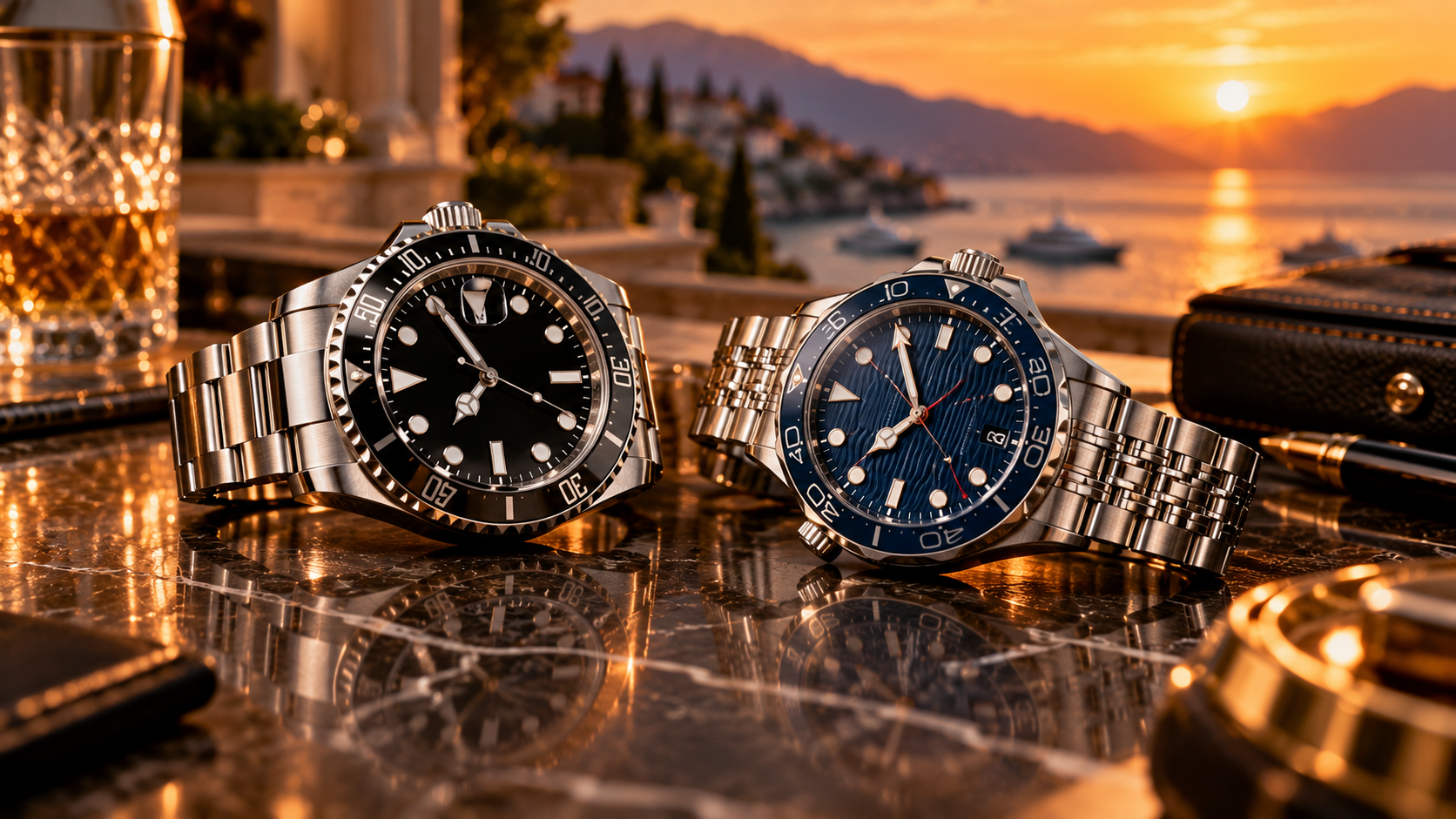
Rolex has achieved something few luxury manufacturers ever manage.
Its name is recognised far beyond the community of watch enthusiasts.
Someone who knows little about movements, escapements or chronometer certification still understands what a Rolex represents.
That recognition is part of the appeal.
It is also part of the price.
Rolex has maintained a remarkably consistent visual identity across many of its most important collections. A Submariner, Datejust or Daytona remains immediately recognisable through generations of design evolution.
Omega's reputation is equally serious among watch enthusiasts, but its public image is more closely associated with specific achievements, collections and technical stories.
The FHL perspective
If you want a watch that communicates luxury almost universally, Rolex has an advantage. If you would rather the conversation begin with the watch itself, Omega offers an equally interesting route.
This is similar to the distinction we explored in our Luxury Electric Car vs Petrol GT comparison: prestige, engineering and emotional appeal are not always the same thing.
Movement Technology: Is Omega Technically Better?
This is where the comparison becomes especially interesting.
Omega has invested heavily in modern mechanical watch technology, particularly its Co-Axial escapement and resistance to magnetic fields.
Many Omega watches carry Master Chronometer certification, involving tests of the completed watch under defined conditions, including magnetic resistance and timekeeping performance.
Rolex takes a different approach, developing its own highly refined movements and applying its Superlative Chronometer standard to finished watches.
Modern Rolex calibres are designed around accuracy, reliability, efficiency and long-term durability.
Rolex's Approach
Precise, robust, extensively refined movements built around dependable everyday ownership.
Rolex states a finished-watch accuracy standard of approximately −2/+2 seconds per day for its Superlative Chronometer watches.
Omega's Approach
Technical innovation including Co-Axial escapements and extensive anti-magnetic engineering.
Many Master Chronometer models are tested to resist magnetic fields of 15,000 gauss and meet the applicable certification criteria.
It would be misleading to declare either brand technically superior in every category. Compare the actual movements inside the specific watches you are considering.
Rolex Submariner vs Omega Seamaster
For many buyers, this is the comparison that matters most.
The Rolex Submariner and Omega Seamaster Diver 300M are two of the most recognisable luxury dive-watch families in the world.
Both offer substantial water resistance, automatic mechanical movements and designs that work equally well with casual clothing or a tailored jacket.
Rolex Submariner
Understated evolution, strong brand recognition, a highly recognisable silhouette and substantial secondary-market demand.
Its appeal is the confidence of a design that rarely needs dramatic reinvention.
Omega Seamaster Diver 300M
Distinctive wave-pattern styling on many versions, technically sophisticated movements and a broad range of materials and configurations.
Its appeal is a more expressive interpretation of the luxury sports watch.
For a buyer who wants the most recognisable luxury dive watch, the Submariner has a compelling argument.
For someone who enjoys the engineering and design but is less interested in paying a premium for Rolex demand, the Seamaster can be an excellent choice.
Buying advice
Try both on. Bracelet comfort, case thickness, clasp design and how the watch sits on your wrist can matter more over ten years than any online comparison.
Rolex Daytona vs Omega Speedmaster
The chronograph comparison introduces an entirely different type of watchmaking heritage.
The Rolex Cosmograph Daytona is deeply associated with motorsport and has become one of the most sought-after modern luxury chronographs.
The Omega Speedmaster Professional is inseparable from the history of human space exploration.
Both have genuine stories rather than marketing inventions.
But their ownership propositions can be very different.
The Daytona is often associated with restricted availability and substantial demand for particular references.
The Speedmaster Professional offers an iconic mechanical chronograph experience, with many versions generally more accessible through conventional retail channels.
Design: Timeless or Adventurous?
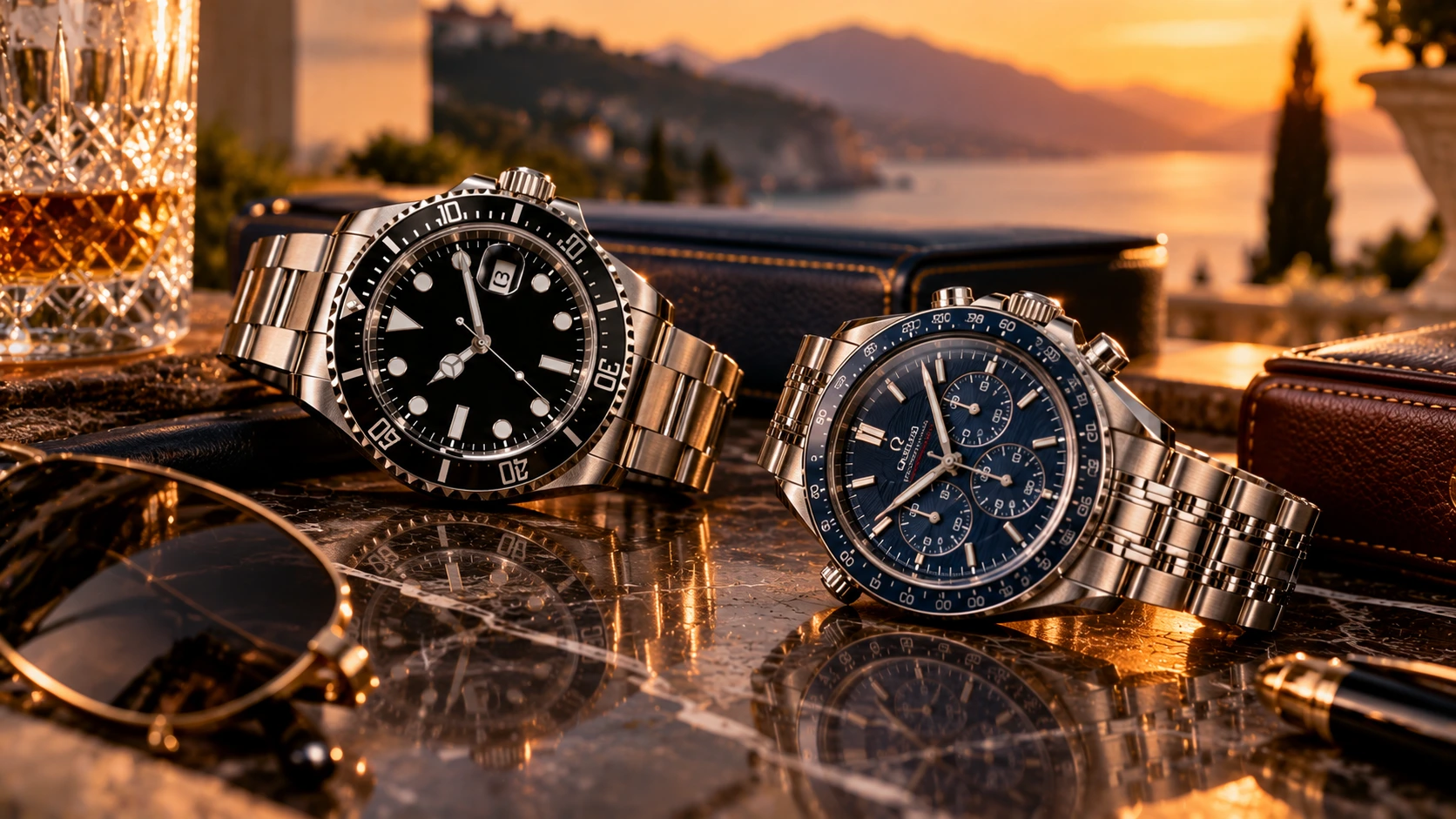
One of Rolex's greatest strengths is restraint.
Its most famous designs have evolved gradually, preserving familiar proportions and identities across generations.
This can make a Rolex feel timeless.
Omega offers a broader visual vocabulary.
Its catalogue includes restrained dress watches, technically adventurous sports models, heritage-inspired designs and more experimental materials.
Neither approach is inherently superior.
Some buyers want a watch that looks essentially as relevant in twenty years as it does today.
Others want an object that feels more individual, expressive or technically distinctive.
Availability: Can You Buy the Watch You Want?
There is an unusual contradiction at the centre of the luxury watch market.
Sometimes the more money you are prepared to spend, the harder it becomes to purchase the exact product you want.
Demand for certain Rolex references has historically exceeded immediate authorised-retailer availability.
That can mean waiting, considering alternatives or purchasing through the secondary market.
Omega generally offers more straightforward access to many of its mainstream collections, although limited editions and particular references can also become difficult to obtain.
For someone who wants to walk into a boutique, try on a watch and make a considered purchase, that difference matters.
A different definition of luxury
Being able to choose the watch you genuinely want, without turning the purchase into a prolonged exercise in availability, has value of its own.
Resale Value: Does Rolex Really Win?
Resale value is one of the strongest reasons buyers consider Rolex.
Certain sought-after Rolex sports references have historically commanded stronger secondary-market demand and, at times, prices above their original retail levels.
But that does not mean every Rolex appreciates.
Nor does it mean every Omega loses value at the same rate.
Reference, condition, age, purchase price, market conditions, rarity, servicing history and the completeness of the original packaging all matter.
A watch bought at a large secondary-market premium has a very different risk profile from the same model bought at retail.
Three things worth remembering
First: historical resale performance is not a guarantee of future value.
Second: buying pre-owned at an attractive price can change the financial equation considerably.
Third: servicing, insurance, dealer margins and selling fees affect the actual return.
Rolex has an advantage in broad market recognition and demand for many prominent references.
But treating any mechanical watch as a guaranteed investment is a mistake.
What Is It Like to Own a Rolex or Omega?
The purchase is only the beginning.
A mechanical luxury watch may be worn for decades, and its long-term ownership experience deserves as much attention as its showroom appearance.
Comfort
Case dimensions, thickness, weight, bracelet design and clasp adjustment can determine whether a watch becomes an everyday companion.
Servicing
Both brands offer established servicing networks. Costs and recommended intervals depend on the model and its condition.
Durability
Modern watches from both manufacturers can be highly robust, but water resistance, seals and mechanical condition require appropriate care.
Personal Satisfaction
The watch that suits your wrist, style and personality will often deliver more lasting pleasure than the one with the most impressive reputation.
For long-term ownership, also consider insurance, theft risk, authenticity documentation and whether the watch has been modified or polished excessively.
Where the Smart Money Looks
There are three broad routes into luxury watch ownership.
Authorised Retailer
The clearest route for a new watch, manufacturer documentation and an established retail relationship. Availability can be the limiting factor for some models.
Certified Pre-Owned
A route worth considering when authentication, inspection and defined warranty coverage are priorities. Check exactly who provides the certification.
Independent Specialist
Can offer wider access to discontinued references and competitive opportunities, but dealer reputation, provenance and return terms are critical.
Private Sale
May offer attractive pricing, but carries additional authenticity, payment, condition and consumer-protection risks.
Before purchasing, check the exact reference number, movement, serial information, service history, warranty, included accessories and return policy.
Which Luxury Watch Should You Choose?
Choose Rolex if...
- You value worldwide recognition and established prestige.
- You prefer restrained, enduring designs.
- Secondary-market demand matters to your decision.
- You have a particular iconic Rolex reference in mind.
- You are comfortable with potential waiting times or secondary-market pricing.
- You want a luxury watch with a strong and immediately recognisable identity.
Choose Omega if...
- You are especially interested in movement technology and engineering.
- You value the histories of space exploration and precision timekeeping.
- You want a broad choice of designs and configurations.
- You prefer more straightforward access to many current models.
- You are exploring strong value in the pre-owned luxury market.
- You want an exceptional mechanical watch without making brand recognition your first priority.
The FHL Luxury Watch Checklist
- Purpose: everyday watch, dress watch, sports watch or collector's piece?
- Reference: are you comparing specific models rather than general brand reputations?
- Fit: have you tried the watch on your wrist?
- Movement: do you understand the calibre and its practical features?
- Condition: are the case, dial, hands, bracelet and movement original and accurately described?
- Provenance: can the seller establish authenticity and ownership history?
- Servicing: what future maintenance might be required?
- Price: how does the asking price compare with realistic market transactions?
- Resale: are you comfortable with the possibility of losing money?
- Emotion: would you still want the watch if nobody else recognised it?
Our favourite question
If you could never sell this watch, would you still want to own it? The answer tells you something important about whether you are buying for yourself or for the market.
Why Mechanical Watches Still Matter
Luxury watches exist in an unusual world.
They are mechanical objects competing with technology that is cheaper, more accurate and more capable.
Yet that apparent disadvantage is part of their appeal.
Owning a fine mechanical watch is not really about needing to know the time.
It is about appreciating an object that represents design, human skill, mechanical ingenuity and continuity.
It is another example of the philosophy behind Luxury Lifestyle at Frequency High Life: the most worthwhile premium purchases offer something beyond their basic function.
The same question arises when comparing electric and petrol grand tourers. Technology can improve the measurable experience while tradition continues to offer emotional value.
Rolex vs Omega FAQs
Is Rolex better than Omega?
Rolex generally has stronger mainstream brand recognition and substantial secondary-market demand for many sought-after references. Omega offers excellent engineering, rich heritage and a broad range of watches. The better choice depends on the specific models and what the buyer values.
Does Rolex hold its value better than Omega?
Many popular Rolex references have historically demonstrated stronger resale demand, but performance varies considerably. Purchase price, model, condition, rarity and market conditions matter, and neither brand guarantees appreciation.
Is Omega a genuine luxury watch brand?
Yes. Omega is a long-established Swiss luxury watch manufacturer with significant achievements in precision timekeeping, professional diving, sports timing and space exploration.
Which is better, Rolex Submariner or Omega Seamaster?
The Submariner offers iconic styling, strong recognition and substantial market demand. The Seamaster Diver 300M offers distinctive design and sophisticated movement technology. Fit, price, availability and personal taste should determine the choice.
Which is better, Rolex Daytona or Omega Speedmaster?
The Daytona is renowned for its motorsport heritage, prestige and demand. The Speedmaster Professional is celebrated for its connection to lunar exploration and mechanical chronograph history. Both are important watches with different ownership propositions.
Is Omega more accurate than Rolex?
Both manufacturers produce highly accurate mechanical watches. Rolex and Omega use different certification and testing frameworks, so meaningful comparisons should examine the specific movement and published standards rather than assume one entire brand is more accurate.
Should I buy a new or pre-owned luxury watch?
New watches offer a straightforward route to manufacturer documentation and warranty coverage. Pre-owned watches can provide access to discontinued references or attractive pricing, but authentication, condition, seller reputation and service history require careful attention.
Rolex or Omega? Buy the Watch, Not Just the Name.
Rolex has an extraordinary ability to combine prestige, recognisable design and long-term desirability.
For someone who wants a watch with global recognition, established identity and strong market interest, Rolex remains an exceptionally compelling choice.
Omega offers a different attraction.
Its engineering, technical ambition, extraordinary heritage and wide range of designs make it one of the most interesting names in luxury watchmaking.
For buyers who care more about the object than the status attached to its name, Omega may offer the more satisfying purchase.
But the final decision should not be made by a logo, a resale chart or somebody else's opinion.
Try the watches. Understand the movements. Consider the ownership experience.
Then choose the one that makes you want to look at your wrist even when you already know the time.
That is when a luxury watch becomes worth owning.